As of 08/25/2026
Back to 2007
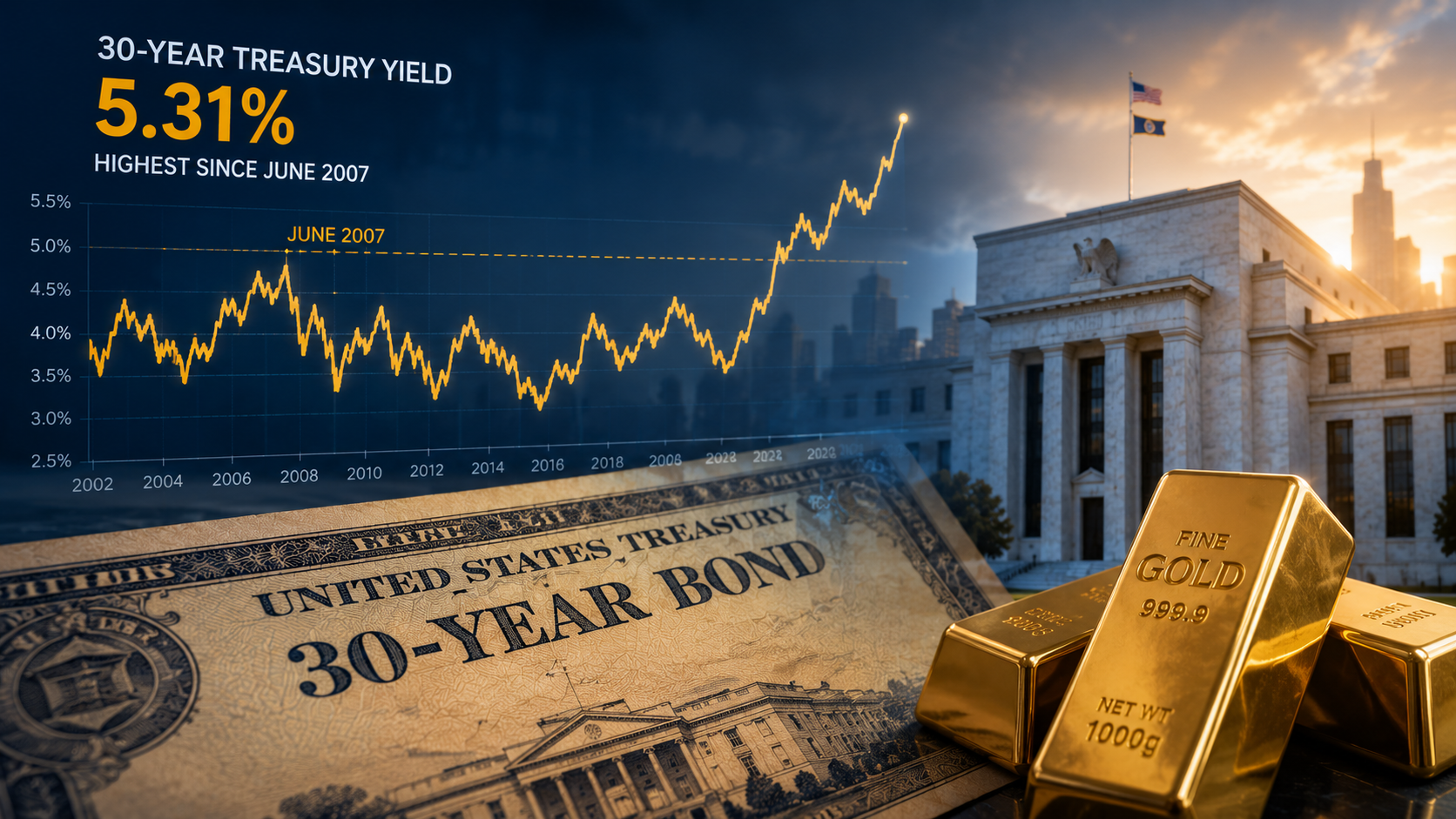
On August 17, the 30-year Treasury yield closed at 5.31%, its highest close since June 2007. The last time the long bond finished a session higher, the first iPhone had not yet gone on sale. An entire generation of portfolios has been built, stress-tested, and retired without ever seeing the long end of the curve where it sits today.

Multi-decade yield highs usually arrive with a tightening Federal Reserve. Not this time.
The Fed Is Not Doing This
The federal funds target range has sat at 3.50% to 3.75% since December. In fact, since the Fed resumed cutting last September, policy rates have fallen 75 basis points, while the 30-year yield has risen 61 basis points. When the long end climbs as the Fed eases, the move may reflect factors beyond policy expectations, including term premium: the extra compensation investors demand for holding long-dated government debt against persistent deficits, heavy supply, and sticky inflation.

Fiscal conditions may help explain part of the move. The national debt crossed $40 trillion for the first time this month, and federal interest expense has reached $1.17 trillion this fiscal year, up 15%. When the Treasury moved to calm the market last week by doubling its buybacks of long-dated debt from $2 billion to at least $4 billion per operation, yields barely responded. None of this is an American quirk. Japan’s 10-year yield touched a three-decade high, German 30-year bonds reached levels last seen in 2011, and French 30-year yields are the highest since 2008.
There is even a tug-of-war embedded in the move. Fed Chair Warsh has suggested he welcomes higher long rates as a form of passive tightening, while the Treasury is actively buying bonds to hold yields down. The two most powerful actors in the market are pulling in opposite directions, and the long end has thus far shown limited response to either.
Gold Shows a Similar Pattern
Gold is normally the mirror image of yields, since higher rates raise the cost of holding an asset that pays nothing. Yet spot gold has climbed 16% from its mid-July low, including a gain of nearly 14% in August alone, over the very stretch in which the long bond sold off to 19-year highs. When gold and long yields rise together, the market may be reflecting concerns about sovereign balance sheets rather than primarily repricing growth or Fed expectations, and it is expressing that view on both sides of the ledger at once.

What This Means for Positioning
A 30-year Treasury above 5.3% offers genuinely attractive income by the standards of the past two decades, but 2026 has been a reminder that yield is not the same as safety. This year’s losses in long-duration bonds have come not from a hawkish Fed, but from a market asking harder questions about fiscal sustainability, which is precisely the environment in which static duration exposure may create challenges for traditional portfolio construction. For advisors, the practical question is whether portfolio ballast should depend on an asset whose price is increasingly set by fiscal sentiment rather than flight-to-quality flows. Whatever the new Fed Chair says at Jackson Hole on Friday, the long end has already reflected investors’ current concerns.
IMPORTANT DISCLOSURES
Prepared by Kensington Asset Management, LLC (“KAM”). Xtollo Investment Partners, LLC (“Xtollo”) is under common ownership with KAM and promotes KAM’s strategies and KAM Funds. Xtollo is compensated by KAM under an intercompany agreement, which creates a conflict of interest.
XT4540781188