As of 5/7/2026
A Market Held at Both Ends
It is unusual to see equities, bonds, oil, and currencies all flagging different versions of the same risk in the same week. The S&P 500 closed Friday at a record 7,230 and the Nasdaq Composite at a record 25,114. At the same moment, the FOMC delivered its largest dissent vote since October 1992, Brent crude is hovering near triple digits with the Strait of Hormuz still severely disrupted in its tenth week, and Japan’s Ministry of Finance reportedly spent more than $30 billion in two days defending the yen at the 160 line.
In our April 23 piece, Velocity vs. Valuation Support, we argued that the rally was launched from record altitude and that the historical reward-to-risk profile after high-altitude thrusts has been less forgiving than after washout lows. What this week reinforces is the second half of that argument. Equities are pricing the best-case version of earnings, peace, and policy. Several other markets are not.
The Loudest Fed Dissent in More Than Three Decades
The April 29 FOMC meeting passed by an 8–4 vote, the first time four officials have dissented since October 1992. Governor Stephen Miran dissented in favor of a 25 basis point cut, while regional presidents Beth Hammack of Cleveland, Neel Kashkari of Minneapolis, and Lorie Logan of Dallas dissented against the inclusion of an “easing bias” in the statement language at the current target range of 3.50%–3.75%.
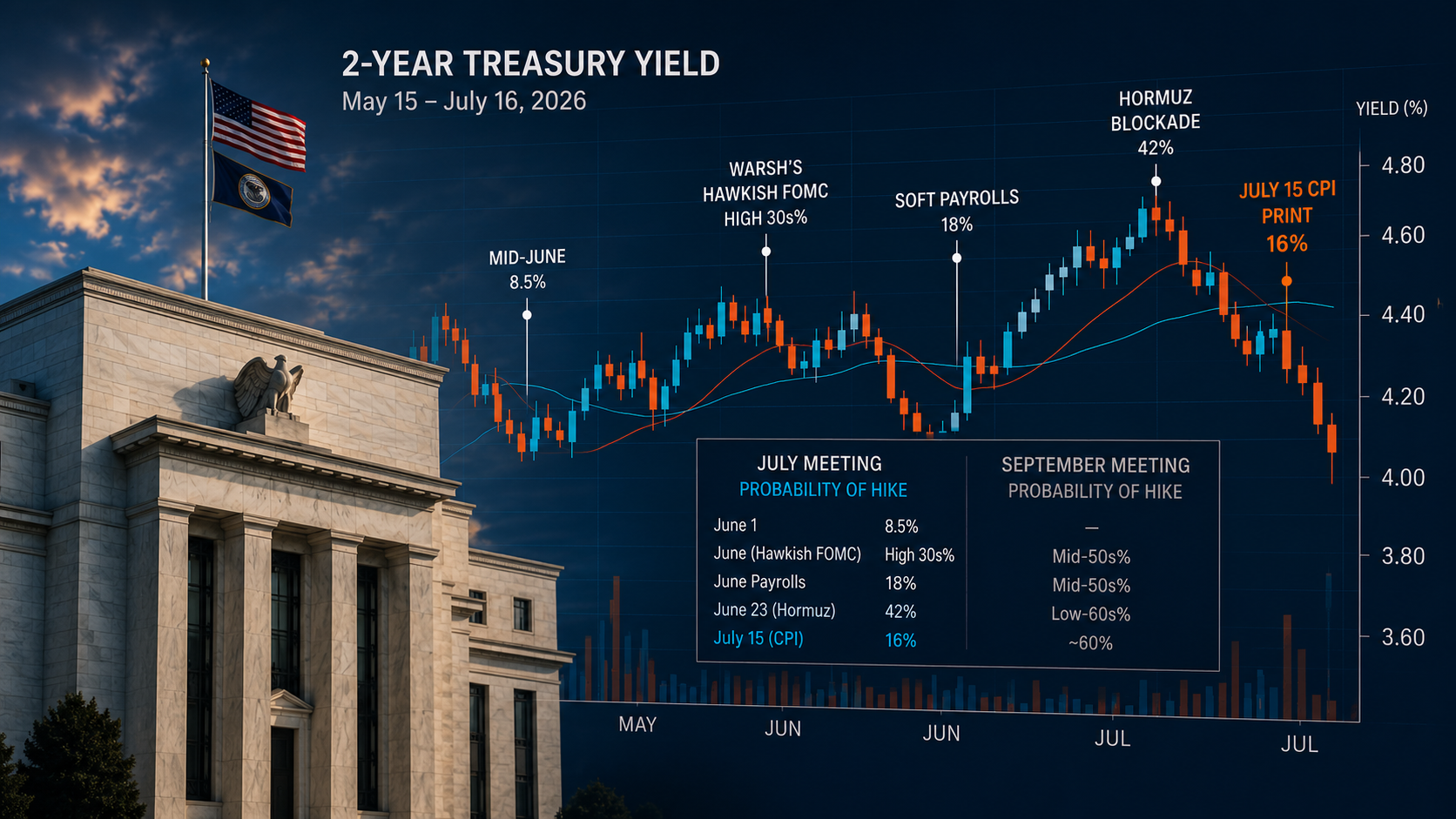
The dissenters were direct in their public explanations. Hammack called the existing language a “clear easing bias” that was “no longer appropriate.” Kashkari went further in a Friday essay, writing that the next move “could be either a cut or a hike,” and explicitly described a scenario in which “rate increases, potentially a series of them, could be warranted.” The Fed has functionally moved from a clean easing path to a two-sided debate, and it has done so publicly. CME FedWatch now shows roughly a 70% probability of a hold at the June meeting, 28% probability of a 25 basis point cut, and a small but non-zero probability of a hike. In other words, the market is no longer debating how quickly the Fed cuts. It is debating whether the Fed can cut at all.

Inflation Is Still the Story Powell Cannot Quite Close Out
The dissenters’ arguments do not exist in a vacuum. The March PCE report, released April 30, showed headline PCE up 0.7% month-over-month, the largest monthly gain since mid-2022, and 3.5% year-over-year, the highest annual reading since May 2023. Core PCE rose 3.2% year-over-year. In his press conference, Chair Powell described the situation as one in which the economy has been hit by “four supply shocks” in succession – the pandemic, the invasion of Ukraine, tariffs, and now Iran – and acknowledged that inflation had been “misbehaving.”
A 3.2% core reading is not, in isolation, a crisis number. What makes it consequential is its persistence. Inflation has now run above the Fed’s 2% target for nearly five years, and the labor market continues to firm rather than weaken, with initial jobless claims of 189,000 for the week ended April 25 marking the lowest reading since 1969. The market priced an easing path through 2026 for most of the past year. That assumption is no longer the consensus inside the building.

The Hormuz Premium Is Still in the Tape
The proximate trigger for both the inflation acceleration and the Fed dissent appears to be energy. Shipping through the Strait of Hormuz has been materially disrupted since February 28, 2026, in what the International Energy Agency has called an “unprecedented supply shock.” The strait normally carries roughly 25% of seaborne oil trade and 20% of LNG. Brent crude has surged roughly 60% since the war began, traded as high as ~$138 in early April before closing the week of April 27 near $114. Barclays raised its 2026 Brent forecast on May 1 from $85 to $100 per barrel and warned prices could reprice toward $110 if the disruption persists through May.
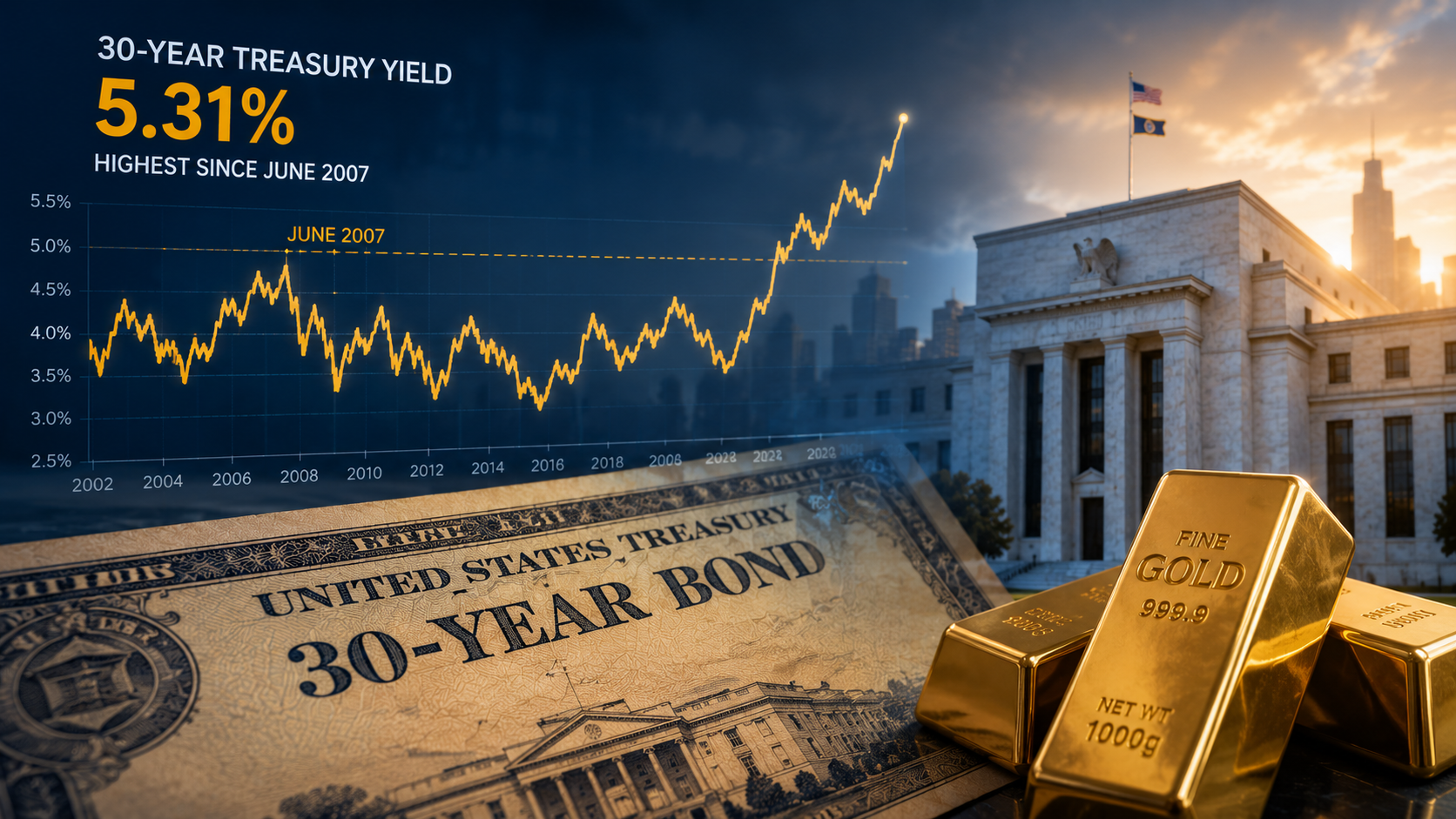
The 10-year Treasury yield touched a nine-month high of 4.42% on April 29 before settling at 4.40% on April 30. Equities have continued making new highs in part because the bond market has been willing to absorb the inflation news without forcing a broader risk repricing. That tolerance is conditional on the conflict resolving rather than escalating. As of Monday, May 4, oil was again volatile on reports of further Strait of Hormuz incidents and missile interceptions in the UAE.

Yen Intervention Highlights Growing Macro-Equity Divergence
Currency markets have been the clearest barometer of the conflict between equity optimism and macro stress. USD/JPY breached 160 in late April, prompting reported intervention from Japan’s Ministry of Finance on April 30 and May 1 estimated at more than $30 billion combined, the largest pair of intervention episodes since the 2024 defense of the same level. The pair fell roughly 2.2% in response, settling near 156.5 by Friday’s close. The 2024 episode, structurally similar, saw USD/JPY fully retrace its losses within two months.
The yen does not appear to be the cause of the market’s stress. It is one of the pressure gauges. A weaker yen reflects the same basic tension visible elsewhere: higher energy prices, sticky inflation, a Fed that may be less able to ease, and global capital still gravitating toward the dollar.
The Takeaway
The April 23 thrust pushed the S&P 500 back to record highs, and Q1 earnings have so far signaled the move, with 84% of reporting companies beating estimates through the May 1 cutoff. (Source: FactSet Earnings Insight, May 1, 2026.) That is the kind of fundamental support potential a high-altitude rally needs.
What it does not have is a quiet macro backdrop. The Fed’s own committee just told the market that the easing bias built into pricing may no longer be the consensus internal view. Headline inflation is at its highest level in nearly three years. Oil remains a one-headline-away problem. The forward 12-month P/E sits at roughly 20.9 versus a 10-year average of 18.9, and the equity risk premium is among the lowest readings on record. None of this argues that the rally has to fail. It argues that the path forward depends on more variables resolving favorably than the price action alone implies. New highs are not a emerging sign that risks have disappeared. They are a possible sign that markets have, for now, chosen to discount them.
The market has the records. The macro has the risks. Both are real. The question is how long equity investors can keep treating them as separate stories.
XT20260507