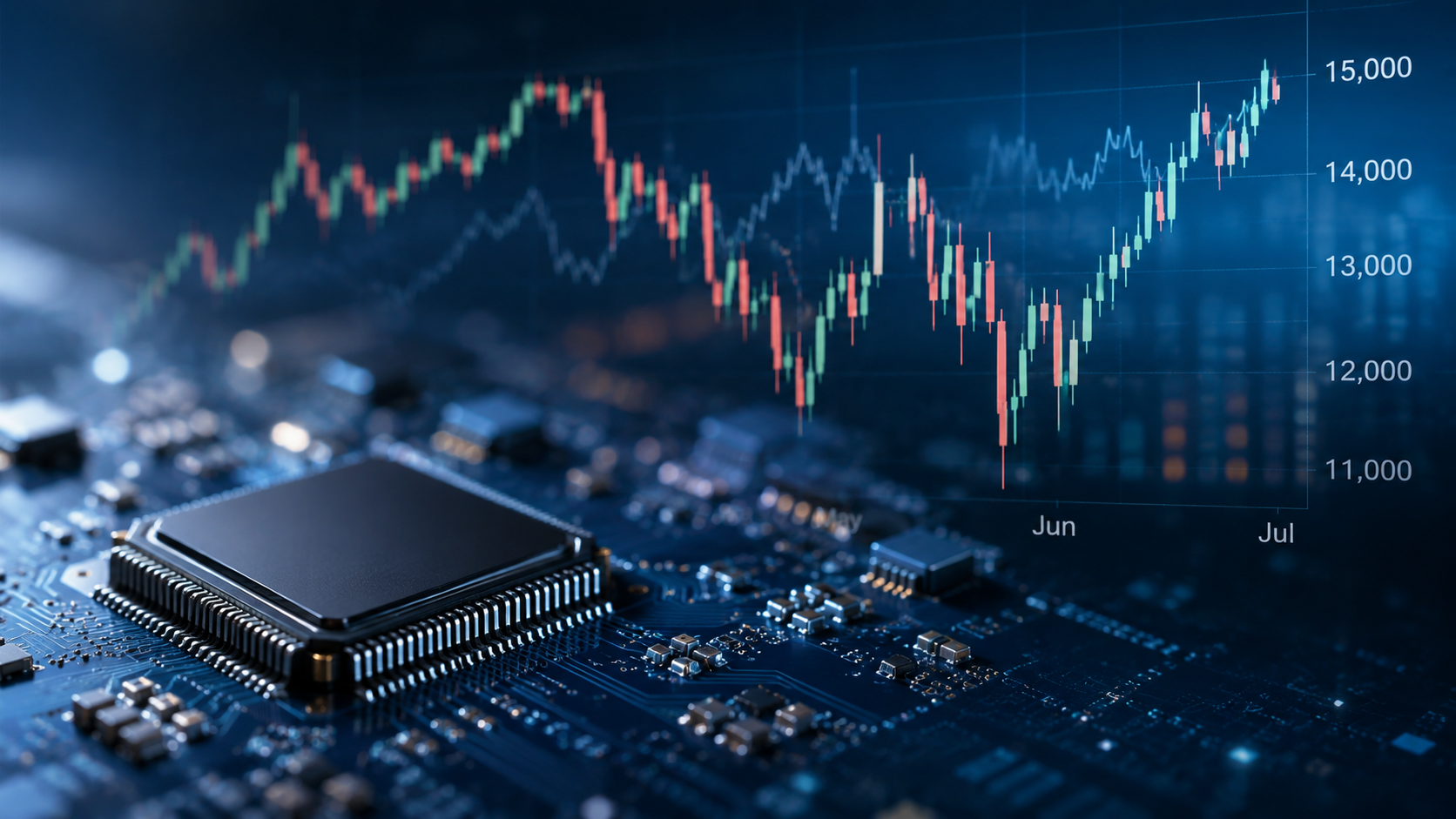
The AI boom has been the dominant market story of the past few years, and 2025 has only intensified that narrative. Nvidia recently became the first company in history to reach a $5 trillion market capitalization, with its share price up roughly twelvefold since the launch of ChatGPT in late 2022 (10/29/2025). A small group of mega cap AI beneficiaries now drives an outsized share of index returns, economic sentiment, and even consumption.
At the same time, AI related names are trading at premium valuations, and their weight inside core benchmarks has made them a single, powerful risk factor for most investors. This edition of Market Insights looks at the AI complex through three lenses – performance, concentration, and valuation – and offers a simple framework for how advisors might participate in the theme without letting one narrative dominate portfolio risk.
AI Leaders vs The Rest Of The World
Over the past decade, the MSCI ACWI IMI Robotics & AI Filtered Index has turned $100 into a bit more than $650, compared with under $300 for the parent ACWI IMI index. The outperformance has been especially sharp in the last two years, with the AI index posting stronger year to date gains than global equities overall, even though the underlying benchmark also captures earlier robotics and automation themes.

Source: MSCI as of October 31, 2025
The path has been more volatile. The AI index has already experienced a peak to trough drawdown that was meaningfully deeper than the broader global index, including a sizable setback in 2022. The basic trade off is clear in this first chart: investors have been rewarded for embracing AI related volatility so far, but a growing share of that performance is coming from a relatively narrow group of companies.
How Crowded Is AI Leadership?
The AI boom is not just about one stock, but the leadership is extremely concentrated. The so called Magnificent 7 – Apple, Microsoft, Alphabet, Amazon, Meta, Nvidia, and Tesla – are roughly as large as the bottom 448 stocks in the S&P 500 combined. In market value terms, those seven names are also on par with the combined capitalization of key defensive sectors such as health care and consumer staples.

Source: S&P Global as of November 17, 2025
Per JPMorgan, a basket of about 30 AI related stocks now accounts for 44% of the S&P 500’s total market capitalization and has generated $5 trillion in gains over the past year alone. That concentration is part of the AI opportunity story, but it also means the theme has become a single, dominant factor inside what most investors consider their diversified core equity holdings.
What The Market Is Already Pricing Into AI
On fundamentals, the AI cohort now trades at valuations that reflect very high expectations. The global Robotics and AI index shows significantly higher trailing and forward P/E ratios and a meaningfully higher price to book ratio than the broader ACWI IMI benchmark, while offering a lower dividend yield. In simple terms, investors are paying close to double the earnings multiple and more than twice the price to book for AI related companies in exchange for the prospect of superior long term growth.

Source: MSCI as of October 31, 2025
Some of that growth is real and visible. Nvidia’s revenues and earnings have compounded at extraordinary rates, helping propel it to a $5 trillion market cap and a dramatic increase in its share price since late 2022. For the latest quarter, S&P 500 earnings growth moved from single digit expectations to low double digit actual results as companies reported, with AI linked mega caps contributing meaningfully to that upside. The open question is how long that fundamental outperformance can continue at current rates, and how much of it is already embedded in today’s prices, not just for Nvidia but across the broader AI ecosystem.
Pulling It Together – How Should Advisors Think About The AI Crossroads?
The common thread across these charts is that the AI trade is both powerful and crowded. On one side, a decade of outperformance, rapid earnings growth, and significant capital investment into AI infrastructure have earned these companies a premium. On the other, elevated valuations and rising index concentration mean that expectations now require a very high bar, and setbacks in a relatively small number of names can increasingly move entire benchmarks and influence the real economy.
An important nuance is that this apparent exuberance in AI is unfolding within a broader market that still does not look euphoric. Several widely followed sentiment and positioning indicators continue to show elevated levels of investor caution, even as major equity indices trade near record highs. That combination – a crowded AI complex set against a still skeptical backdrop – makes it especially important to know exactly how much of a client’s risk budget is effectively tied to this one theme.
For advisors, three practical implications follow:
- Measure AI exposure explicitly. Between the Magnificent 7 and a broader AI basket, most equity portfolios already have a substantial AI bet via passive allocations alone. Understanding how much of a client’s total equity risk is effectively tied to this theme is an essential first step.
- Differentiate participation from concentration. There is a big difference between having AI exposure through broad market indexes and layering on additional, concentrated vehicles that tilt even further into the theme. Incremental AI exposure should consider being sized and funded deliberately, not simply added on top of existing concentration.
- Build portfolios that can live with either outcome. The payoff from AI could arrive faster than skeptics expect, making valuations appear reasonable in hindsight, or it could be lumpier, with periods where capital intensity, regulatory friction, or slower adoption lead to sharp setbacks. Portfolios that combine participation in long term growth themes with diversification, explicit risk management, and clear client communication will be most likely better positioned than those that implicitly bet on only one path.
AI is likely to remain a central economic and market force for years, but the trade around it is entering a more delicate phase. When expectations become crowded, the question shifts from “Is this a big idea?” to “How much of that idea is already in the price, and how much risk are we taking to own it?” Our aim with this edition of Market Insights is to help you answer that question with clients in the weeks and months ahead.