Moody’s finally caught up. By downgrading the US sovereign credit rating from Aaa to Aa1, the last of the three major agencies has now stripped the US of its spotless rating. Markets barely blinked. But while the downgrade didn’t rattle equity investors, the implications for bond markets, inflation expectations, and asset allocation are far from trivial. In this month’s Market Insights, we explore what the downgrade tells us, and what it doesn’t, about the shifting tectonics beneath the global financial system.
Fiscal Reckoning: Debt and Deficits Take Center Stage
Moody’s rationale focused on two issues that are becoming harder to ignore: persistently large fiscal deficits and the rising cost of servicing the nation’s $36 trillion in debt. The US deficit remained near 6.28% of GDP at the beginning of 2024, and could reach nearly 9% by 2035, according to projections. Interest payments are expected to exceed $1 trillion annually in 2026, a level that would have sparked panic, but now elicits little more than a shrug.
Yet these dynamics may not remain benign. At some point, continued deficits will either push inflation higher or require a rise in real rates to restore equilibrium. The cost of complacency is growing, even if the market doesn’t feel it yet.

Source: Congressional Budget Office as of February 6, 2025
Treasury Market Tension: Ratings vs. Reality
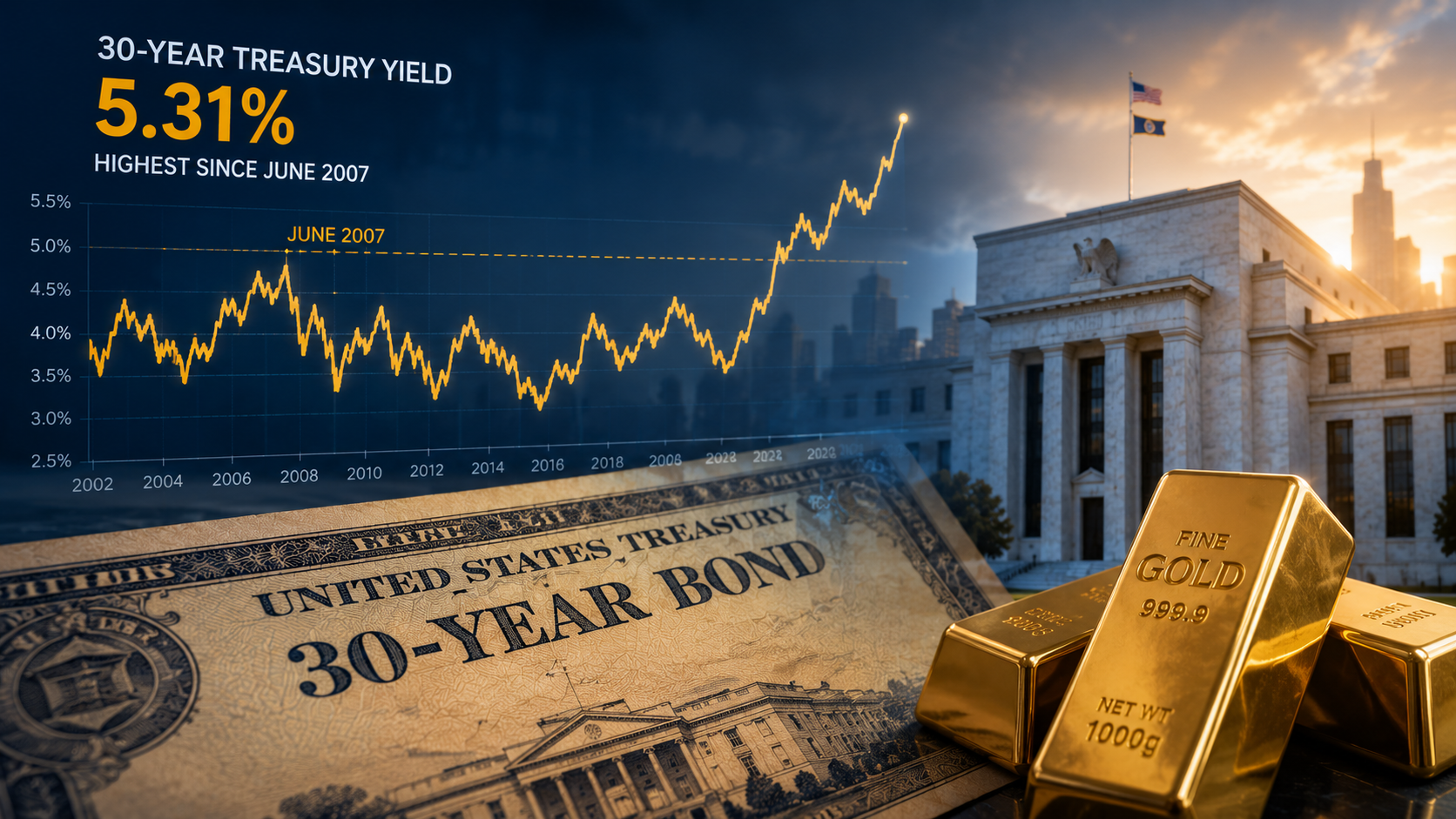
After each of the past three US downgrades (S&P in 2011, Fitch in 2023, and now Moody’s in 2025), yields spiked initially, only to retreat in subsequent weeks. This reflects a core paradox: despite growing fiscal concerns, Treasuries remain the world’s preferred safe-haven asset.
In 2011 and again in 2023, investors rushed back into Treasuries even after the downgrade. The same appears to be happening now. But the longer-term pattern may be different this time. Treasury issuance is surging, foreign appetite is weakening, and the term premium is rising, indicating investors may be reassessing the long-term fiscal outlook.

Source: MacroVisor as of May 17, 2025
Still King of Collateral, for Now
One reason markets haven’t panicked is structural: regulatory frameworks still treat AA-rated US debt the same as AAA. Under Basel Rules1, government bonds rated between AAA and AA- carry a 0% capital risk weight. That means commercial banks, pensions, and insurers can hold Treasuries with no additional capital charge. So while the downgrade may dent confidence, it does not diminish Treasuries’ role as the plumbing of the global financial system.
But there are signs of pressure. Foreign holdings of Treasuries have been falling, with China in particular reducing its stake. The UK, often a proxy for hedge funds, has overtaken China as the second largest foreign holder. If the downgrade triggers rebalancing among sovereign or institutional buyers, the impact on yields could be more enduring this time around.

Source: MacroMicro as of March 31, 2025
The New Inflation Math: Fiscal Deficits and the Neutral Rate
The Fed still estimates the neutral nominal interest rate, the rate at which the economy neither accelerates nor slows, at 3%. But markets are beginning to price it closer to 3.5%, as reflected in rising real yields and forward rate curves. Together, these indicators point to a structurally higher long-term cost of capital than the Fed’s projections suggest.
This shift has important implications. Even if the Fed remains on hold, the structural cost of capital is drifting higher, most visible at the long end of the curve. That has implications for equity valuations, housing affordability, and corporate investment. It also puts upward pressure on global bond yields, especially as supply continues to increase.

Source: Statista as of April 16, 2025
Conclusion: AAA No Longer, but Assumptions Still Hold
The Moody’s downgrade doesn’t signal a crisis. But it does signal a change in trajectory. The US fiscal picture is deteriorating in plain sight, and while the mechanics of the financial system still treat Treasuries as pristine, the narrative is shifting.
For investors, the takeaway isn’t to flee risk, but to understand where risk is evolving. Credit downgrades don’t typically lead to defaults, but they do reflect a change in how the world views the safety of US assets. It’s not time to panic, but it may be time to prepare for a world where “risk-free” isn’t quite what it used to be.