Financial markets occasionally deliver periods marked by unusual events and unexpected correlations. Yet today’s environment stands apart, marked by conditions rarely, if ever, seen in modern market history: simultaneous declines in stocks and bonds, elevated volatility reminiscent of crisis periods, a near-freeze in the high-yield bond market, and corporate uncertainty at historically elevated levels. These anomalies reflect deeper economic concerns, primarily stemming from heightened tariff uncertainties, inflation fears, and ambiguous monetary and fiscal policy paths.
Stocks vs. Bonds Divergence: Breaking Tradition
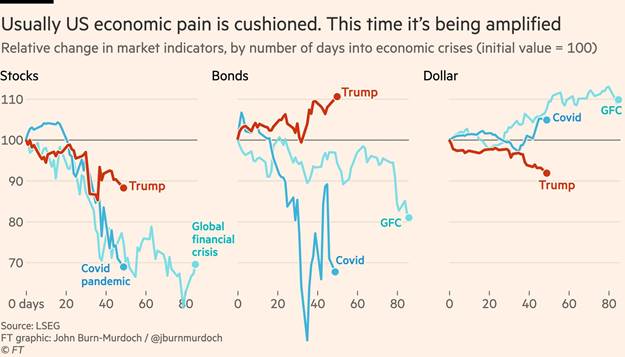
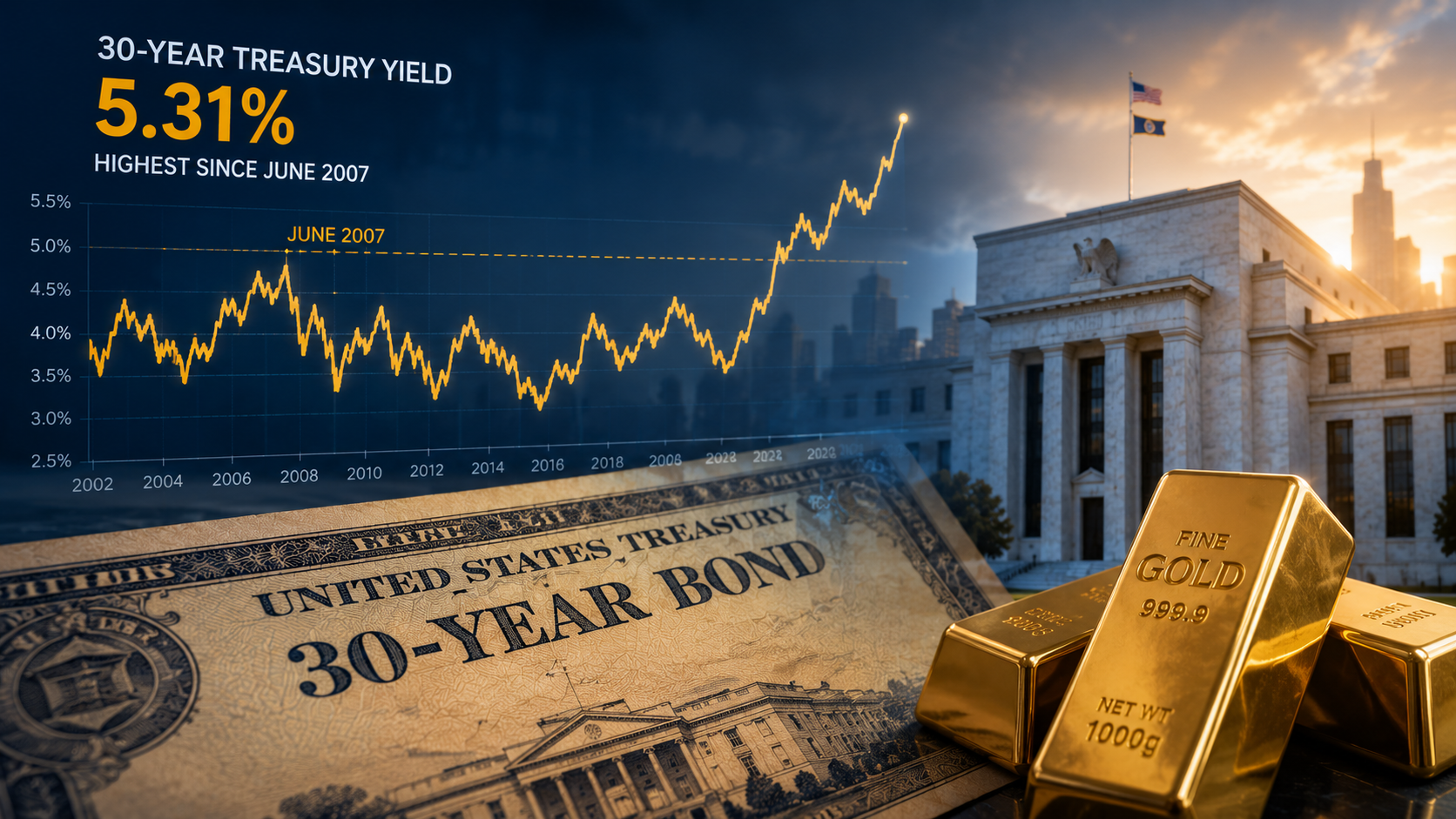
Traditionally, investors flee to bonds as safe havens when stocks decline. April 2025 has upended this traditional relationship. While the S&P 500 has fallen roughly 8% month-to-date (as of close April 21, 2025), the 30-year Treasury yield simultaneously surged by 33 basis points, reaching 4.91%, its highest level in three months. This rare market behavior potentially signals broader concerns beyond short-term risk aversion, hinting at long-term anxieties around persistent inflation, fiscal policy uncertainty, and unclear outcomes of ongoing trade tensions. According to Goldman Sachs, similar simultaneous declines in equities and the US dollar (with the dollar index down 9% year-to-date) have occurred only six times in the last 55 years. Historically, these scenarios, including the 1970s stagflation, 1990s Gulf War-induced inflation fears, and post-9/11 economic uncertainty, resulted in average declines of approximately 15% for the S&P 500 and 9% for the dollar, figures strikingly close to today’s YTD performance.
Heightened Volatility: Investor Sentiment on the Edge

Market volatility serves as a barometer of investor sentiment, and currently, sentiment is significantly strained. Through April 21st, the S&P 500 has already logged 19 days with declines exceeding 1% – matching the total for all of 2024 in just four months and putting it on pace to rival the 63 such days recorded in 2022. This increased frequency of sharp downward moves highlights a market that is hypersensitive to policy headlines, especially those related to tariffs and trade policy. Investors have responded dramatically to even minor news, amplifying volatility and complicating market navigation.
High Yield Freeze: Bond Market Signaling Distress

April’s tariff escalation triggered a severe reaction in leveraged finance markets. High-yield bond issuances, typically robust, plummeted nearly to zero as investors became wary of heightened default risks. Goldman Sachs recently revised its default forecast significantly upward, projecting default rates of 5% for high-yield issuers and 8% for leveraged loan borrowers, sharply above previous estimates of 3% and 3.5%, respectively. This sudden freeze underscores how deeply investor confidence has been shaken by recent tariff-induced uncertainty and broader macroeconomic anxieties.
Earnings Expectations: Corporations Hit The Brakes

Corporate outlooks, critical economic indicators, have deteriorated sharply early in the Q1 2025 earnings season. As of April 17, 2025, just two weeks into the season, only 13% of companies reporting thus far have issued forward guidance (the average is 40%), marking the lowest proportion since the height of the COVID-19 crisis. Moreover, early indications suggest negative earnings revisions are surging toward levels comparable to the 2008 Global Financial Crisis. While it’s still early in the earnings season, the initial reluctance to provide guidance, coupled with broadly negative sentiment, has exacerbated uncertainty and driven investors toward caution, further destabilizing markets.
Navigating Forward
The confluence of these market anomalies – unusual equity and bond dynamics, heightened volatility, frozen high yield bond markets, and historic corporate uncertainty -suggests a deeply unsettled investment landscape. Until tariff-related uncertainties subside and clearer monetary and fiscal policy directions emerge, volatility is likely to persist, presenting both challenges and opportunities ahead. Investors who remain nimble, risk-aware, and selectively opportunistic may find ways to capitalize on the volatility ahead.